
Straight sheets are simple
On a plain single-plane or simple gable roof, the sheets are mostly full-length runs. Offcut optimisation adds little because there are few meaningful angled cuts to reuse.
Long-run roofing cut list and offcut planning
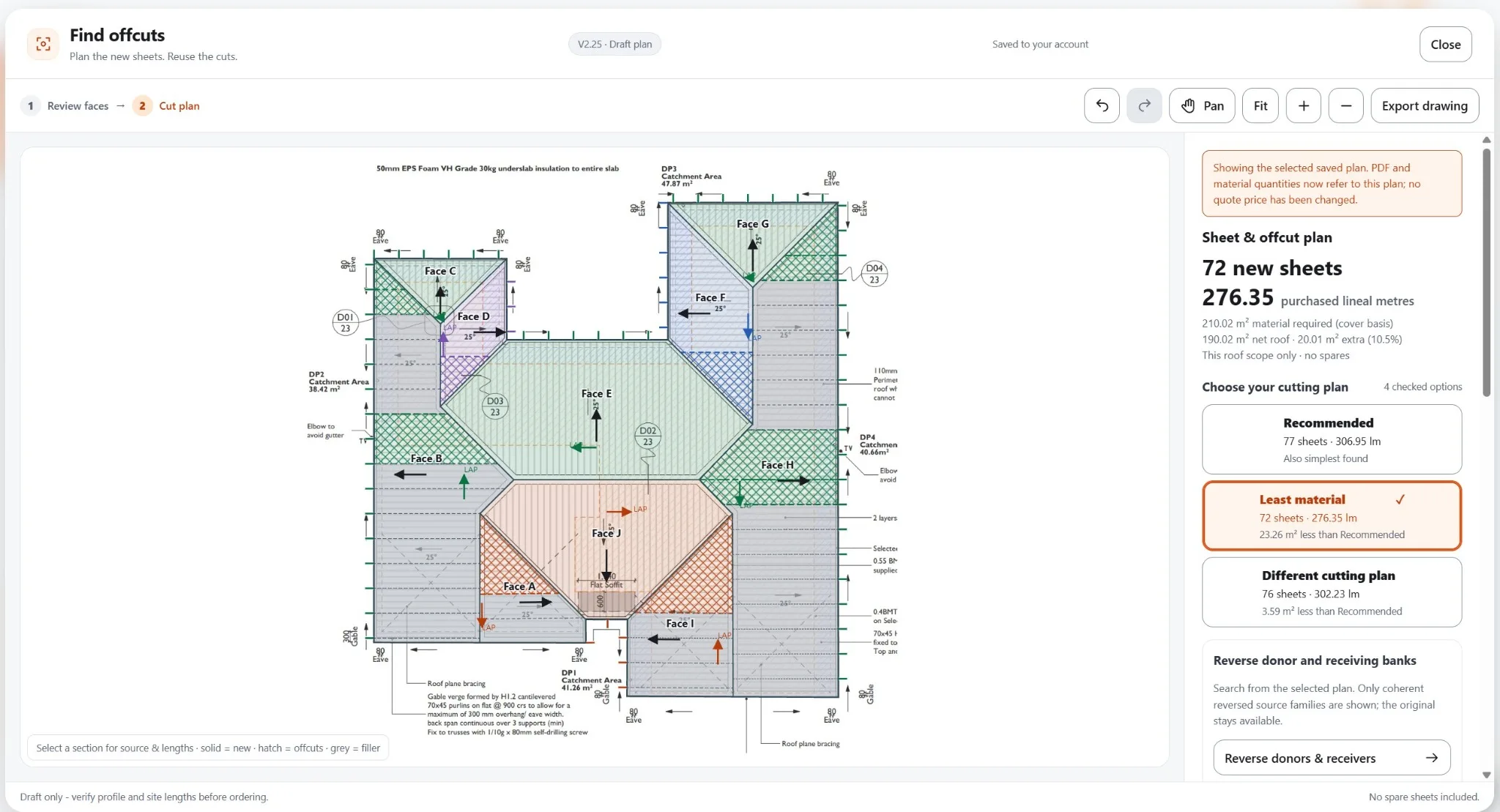
Offcut Optimiser turns a reviewed roof takeoff into suggested whole-roof cutting plans. See how many sheets or purchased lengths the geometry is likely to need, where compatible angled offcuts may be reused and whether your quote has enough material allowed before the job is won.
The real estimating problem
On a plain single-plane or simple gable roof, the sheets are mostly full-length runs. Offcut optimisation adds little because there are few meaningful angled cuts to reuse.
Diagonal cuts create triangular or tapered leftovers. Some can supply another face. Others cannot. That is where a simple area plus waste percentage starts to lose accuracy.
A blanket 10% or 15% allowance may be too high on one roof and too low on another. On difficult geometry, the extra purchased material can reach 20%, 30% or more because useful reuse is limited.
Quote it before you win it
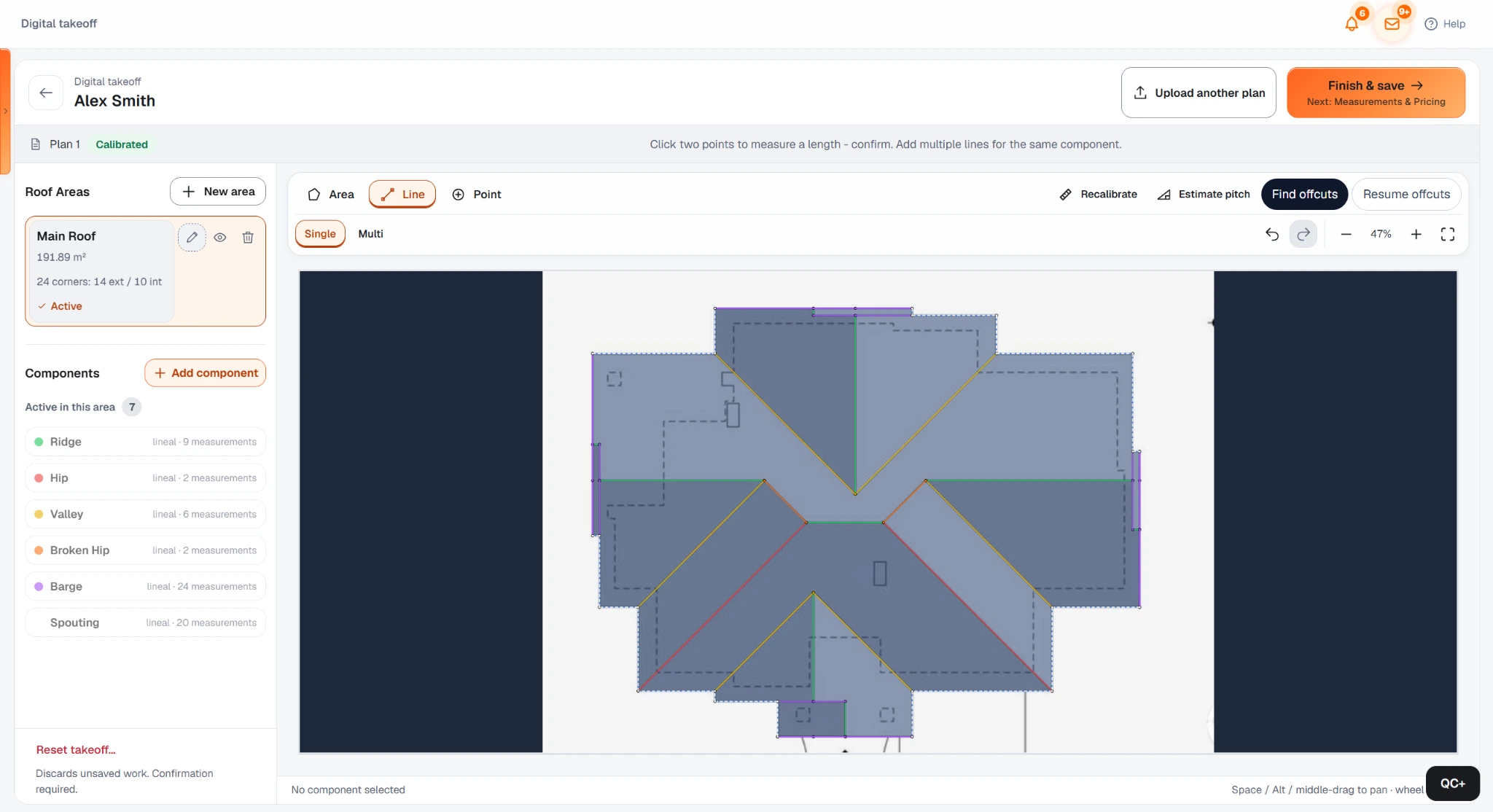
Complete or scan the roof geometry in Digital Takeoff.
Create suggested whole-roof cutting plans from the measured faces and lengths.
See the likely sheet count, purchased length and offcut reuse before pricing.
Carry a more realistic material allowance into the job price.
If you win the job, adjust the plan if an experienced installer sees a better arrangement.
On a quoted job, an extra few sheets or long lengths can remove hundreds of dollars from profit. Generate a credible plan early, price from that material picture, then refine only the jobs that need it.

What the generator gives you
See how required lengths could be supplied across the roof rather than treating each face as fresh full-length material by default.
Where an angled cut leaves a compatible piece, the plan can reuse it on another receiving face instead of automatically counting it as waste.
Compare generated options by sheet count and purchased length so the estimator can choose a practical allowance before the quote is sent.
Human judgement stays useful
On a straightforward hip or valley roof, the suggested plan may already be practical enough to work from after normal checking.
Move a source or receiving cut when an installer sees a better combination. The plan is a head start, not a locked instruction.
If a difficult roof produces an impractical arrangement, keep the material warning it exposed and build the final cut list manually.
An estimator does not need to manually solve every hip and valley pairing from scratch. A reviewed Roof Scan Assist or Digital Takeoff result can feed the optimiser, which creates the first cut-plan options automatically.
Who it is for
Especially relevant in New Zealand and Australia, where cut-to-length corrugated and ribbed metal roofing is common. Also useful for metal-roofing work across other markets.
Useful where panels are ordered to specific lengths and hip, valley or dormer cuts create meaningful offcut decisions.
Applicable to compatible sheet and panel systems where the roof geometry drives real ordered lengths.
If every sheet is a simple full-length run with no useful angled offcuts, detailed optimisation is usually unnecessary.
Good fit, clear limits
QuoteCore+ is built around a connected measure-to-price workflow. It is deliberately not trying to replace every piece of software in a construction business.
See it on a real roof
Measure a roof plan in the browser and see the geometry that sits upstream of cut planning.
Open the free roof takeoffShow us how you quote long-run or metal roofing and we will demonstrate the workflow around your use case. No obligation.
Book a tailored demoAdd Digital Takeoff and Offcut Optimiser in the pricing builder and see the resulting monthly subscription.
See pricingFAQ
Practical answers about how QuoteCore+ fits into real estimating, takeoff and quoting workflows.
A cut list maps the sheet or panel lengths needed for the roof and, on roofs with hips, valleys or other angled cuts, how useful offcuts may be reused on other faces.
Long-run roofing is ordered as real lengths. Some angled offcuts can be reused and others have nowhere useful to go, so the real extra material can be lower or materially higher than a blanket percentage.
A simple single-plane or straight-sheet roof usually does not need sophisticated offcut planning. The feature is most useful where angled cuts can potentially be reused elsewhere on the roof.
No. It produces a strong suggested plan, not a guaranteed mathematical optimum. Review, refine or discard it. A skilled roofer may improve the arrangement.
Yes. It can provide the initial plan automatically, with a roofing expert reviewing unusual geometry before material is ordered.
The wider takeoff workflow is mobile-capable, but the current Offcut Optimiser is not optimised for a phone-sized screen.
Related
QuoteCore+
Generate the cut-plan starting point early, quote from a more realistic material allowance, then let your roofing judgement improve the plan where it matters.