29 July 2026
AI Roof Measuring: How to Measure a Roof with AI in 2026
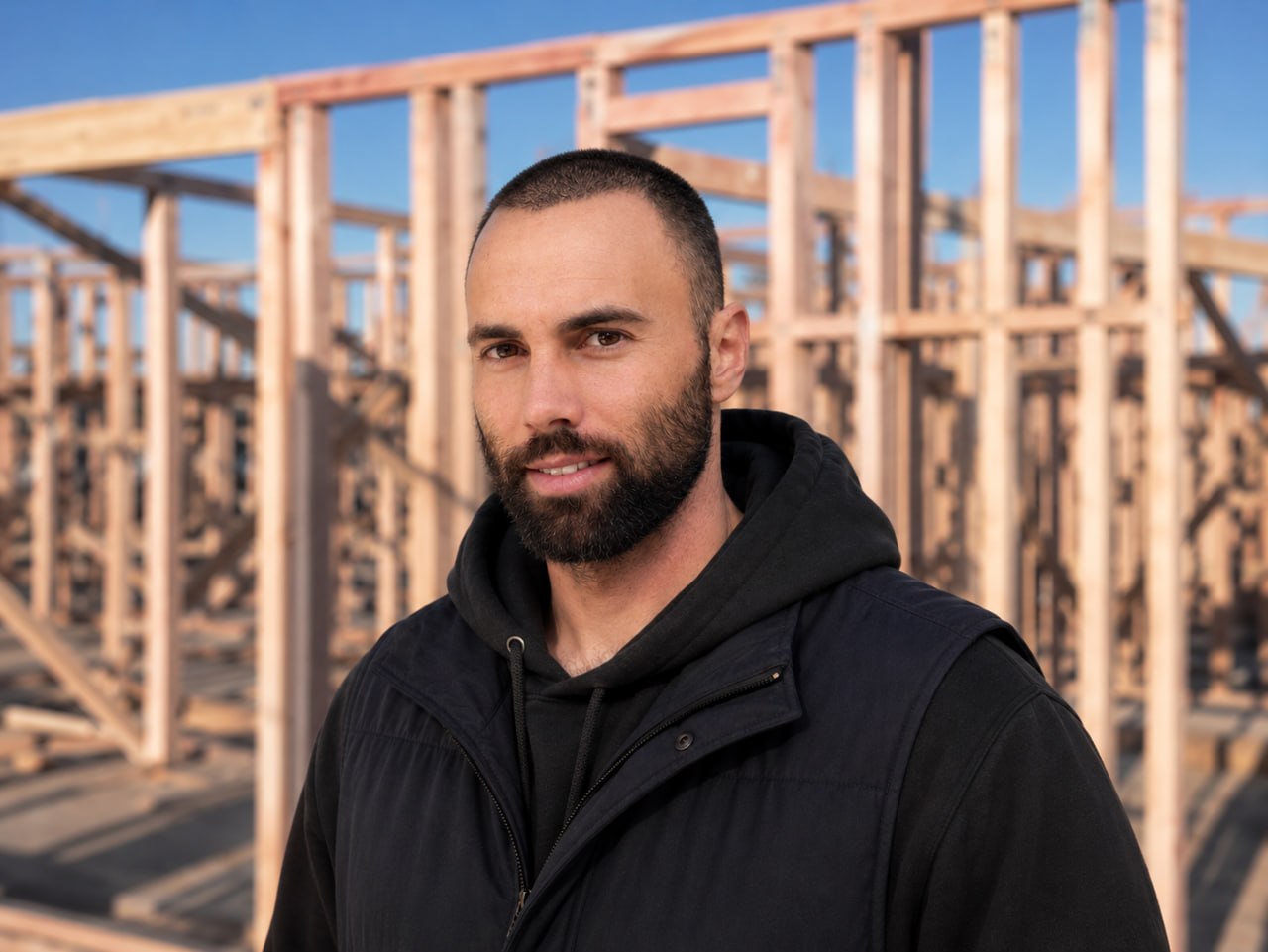
By Shaun, Founder of QuoteCore+. Reviewed 29 July 2026.
If you have ever spent half an hour tracing a roof plan by hand, marking out ridges and valleys with a ruler and a calculator, you will understand why AI roof measuring is getting attention. It takes a job that is tedious, error-prone, and frankly boring, and does the first pass in seconds.
But there is a lot of hype around "AI" in roofing, and not all of it holds up. This guide covers what AI roof measuring actually does, how it works in practice, and where you still need to do the thinking yourself.
What AI roof measuring actually is
There are three different technologies that get called "AI roof measuring" and they are not the same thing:
1. Aerial measurement reports
Services like EagleView and Roofr take satellite or aerial imagery and produce a dimensioned roof report. These have been around for years and use photogrammetry - mathematical image processing, not AI. They are accurate and reliable, but they cost $7-15 per report and you wait 30 minutes to 2 hours for delivery. You also have no way to check or adjust the measurements - you get a PDF and that is it.
If you are weighing report services against doing your own plan takeoff, we compare the two approaches in detail in our EagleView alternative comparison.
2. AI-assisted plan takeoff
This is where you upload a roof plan image - from an architect, a council submission, or your own site sketch - and AI vision models trace the roof geometry for you. The AI reads the plan, identifies the outline, detects internal lines like ridges and valleys, and classifies them. You see the results overlaid on your original image and can adjust anything that looks wrong before generating measurements.
This is what QuoteCore+ does. The AI does the tracing. You do the verifying. The difference from an aerial report is that you stay in control of the output and can fix errors on the spot instead of hoping the report is right.
3. AI damage detection
Drone or smartphone photos analysed by AI to find cracked shingles, missing flashing, ponding water. This is genuinely useful for insurance work and storm damage, but it is a different workflow - it does not produce material takeoffs. If you are quoting a re-roof, you do not need AI damage detection. You need measurements.
How AI plan takeoff works in practice
Here is what actually happens when you use the AI takeoff in QuoteCore+:
You upload a roof plan image. Could be a PDF you exported, a photo of a drawing, or a screenshot from planning software. The AI runs multiple specialised scans using industry-leading vision models to trace the roof geometry, detect internal lines, and classify them. The whole pipeline is designed to be fast and cost-efficient, so you get results in seconds without high per-scan costs being passed on to you.
Then you review. You check the outline, look at any lines the AI flags as uncertain, confirm the scale and pitch, and adjust anything that is wrong. The AI did the boring part. You did the quality check. That is the workflow.
What happens if you do not verify
Here is where I am going to be honest, because most AI marketing is not. If you blindly trust the AI output and send a quote based on it without checking, here is what can go wrong:
- The AI traces an outline that misses a small extension. Your area is 10% low. You order 10% fewer tiles. You run out on day two and have to send someone to the merchants.
- The AI misreads a dimension line - "12.5m" becomes "125m" because the decimal point was faint. Every measurement is now 10x too large. The quote is absurd and the client thinks you are incompetent.
- The AI classifies a broken hip as a full hip. The area calculation is wrong. You order the wrong length of hip tiles.
- The pitch was not annotated on the plan. The AI assumed flat. Your surface area is calculated as plan area, not actual roof area. You underorder by 15-20%.
These are not theoretical. They are the kinds of errors that happen when you remove the human from the loop. The AI is fast but it is not infallible. The whole point of showing you the results on an interactive canvas is so you can catch these things before they become a problem.
What AI is genuinely good at
Despite the warnings above, AI plan takeoff is genuinely useful for specific tasks:
- Initial outline tracing - for most standard roofs, the AI gets the outline right on the first pass. That saves 10-15 minutes of manual tracing.
- Reading scale dimensions - if the plan has a dimension line with a measurement written on it, the AI reads the number and calibrates the scale automatically. No manual scale entry.
- Consistency - the AI traces the same plan the same way every time. A human tracing the same plan at 5pm on a Friday might not be as accurate as at 9am on a Monday. The AI does not get tired.
- Speed - the AI produces a first pass in under a minute. Even with verification, the total time is a fraction of manual tracing.
What AI cannot do
- Infer pitch from a 2D top-down plan - pitch is a 3D property. If it is not written on the plan, the AI cannot guess it. You need to enter it.
- Know what is not on the plan - if the extension was rebuilt last year with a different pitch, the AI does not know that. It traces what is on the paper.
- Make judgment calls about complex geometry - a roof with five hip intersections and two dormers will produce lower-confidence results. The AI will flag lines as "uncertain" rather than guessing, which is the right behaviour, but it means you need to spend more time on verification.
- Assess structural condition - the AI can tell you the roof area. It cannot tell you the timbers are rotting or the substrate needs replacing.
AI plan takeoff vs aerial reports
People ask whether AI plan takeoff replaces EagleView or Roofr. It does not - they serve different situations:
| AI Plan Takeoff (QuoteCore+) | Aerial Report (EagleView, Roofr) | |
|---|---|---|
| When to use | You have a roof plan or measurement sketch | You have no plan and need measurements from aerial imagery |
| What you provide | Upload the plan image | Enter the property address |
| Can you check the work? | Yes - results on an interactive canvas, adjust anything | No - you get a PDF report |
| Cost | Included in QuoteCore+ subscription | $7-15 per report |
If you already have a plan, AI takeoff is faster, cheaper, and gives you control over the output. If you do not have a plan and cannot get one easily, an aerial report is the right tool for that situation.
Try it yourself
The best way to understand what AI roof measuring can and cannot do is to try it. Here is what to do:
- Roof Takeoff Builder - enter your measurements manually and get roof area, ridges, hips, valleys, and material quantities calculated automatically.
- Roofing Calculator - full roofing calculator with pitch, area, rafters, and material quantities.
- Smart Component Creator - once you have your measurements, calculate tile and material quantities.
- Free Quote Generator - turn those measurements into a professional quote you can send to a client.
- Browse all free tools - plus more free roofing calculators and generators.
The takeoff builder, material calculator, and quote generator are all free. When you want the full AI pipeline with unlimited scans, the full component library, and the ability to generate quotes directly from takeoffs, start a free 14-day trial of QuoteCore+. You get every feature, including the AI takeoff assistant, at no cost for 14 days. No card required.
The honest summary
AI roof measuring is not going to replace you. It is not going to replace your site visit on a complex job. It is not going to set your prices or assess your structural risks. What it does is take the most tedious part of the quoting process - tracing a plan, marking lines, calculating areas - and do it fast enough that you can spend your time on the parts that actually need a roofer's brain.
If you are still tracing plans by hand, that is the part AI can help with today. Try it free for 14 days and see whether it fits your workflow.
Ready to quote faster?